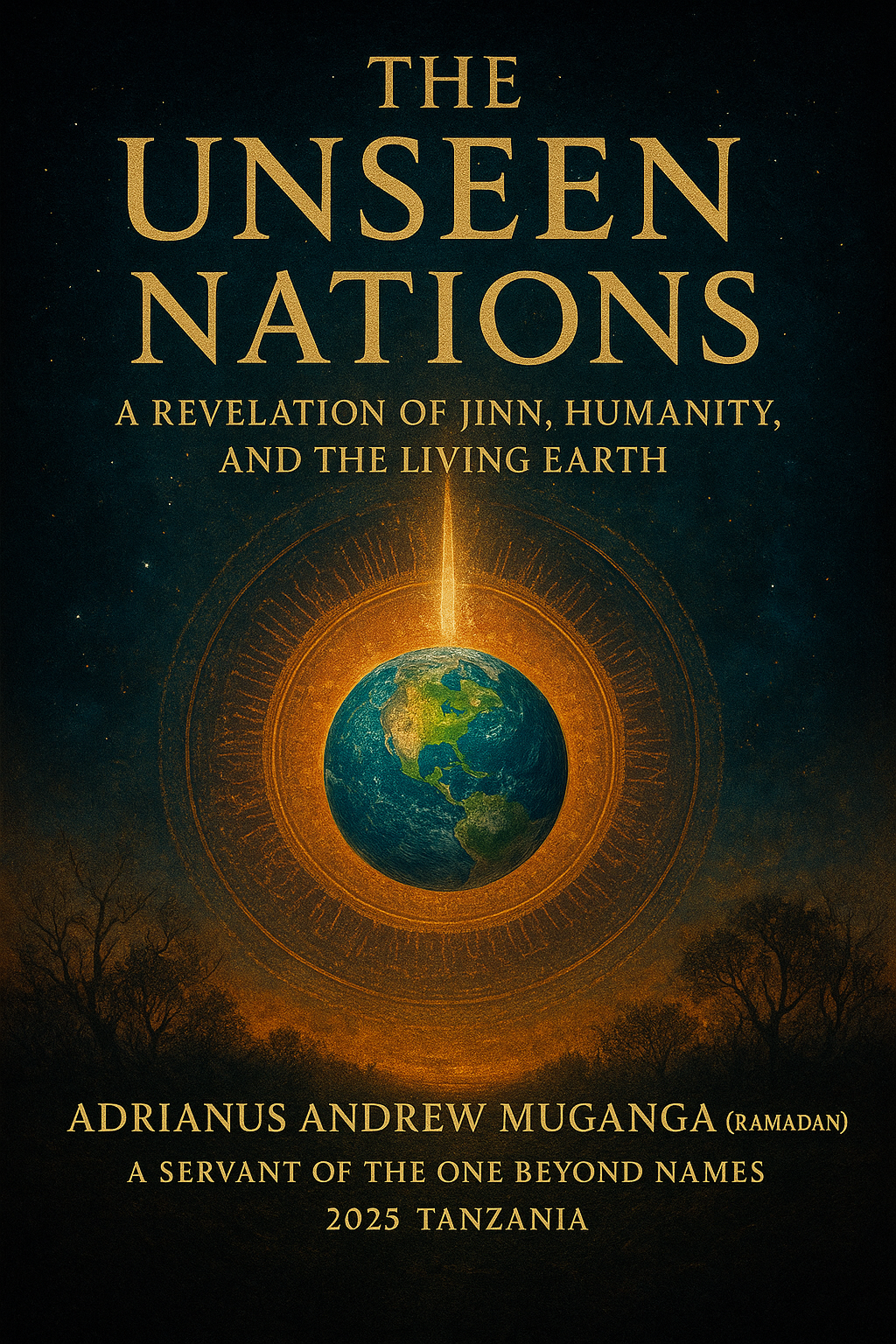
The Unseen Nations: A Revelation of Jinn, Humanity, and the Living Earth
The Unseen Nations is a deeply layered exploration of the structure of creation, the forgotten intersections between the visible and invisible realms, and the human being’s sacred responsibility toward the Earth. Written with the voice of remembrance rather than speculation, this work reveals that the world humanity sees is only a fraction of the reality that surrounds us. The book unites scriptural evidence, ecological insight, spiritual experience, and reasoned explanation to show that creation is filled with intelligent nations, each fulfilling a divinely ordained purpose.
At the heart of this work lies a forgotten truth: humans are not the only nation living on Earth. The Qur’an states that animals, birds, insects, and even unseen beings exist as “umam”—nations—just like humanity. This concept reframes how we understand the world. The Earth is not a human possession but a shared sanctuary, designed to sustain visible and invisible communities. The modern worldview, built upon material perception and scientific reductionism, has erased this understanding, leading humanity into ecological destruction, spiritual blindness, and moral imbalance.
The book begins by re-establishing the greatness and invisibility of the Creator, the One whose command—“Be, and it is”—brings every realm into existence. Without a proper understanding of the Creator, humanity distorts the meaning of creation. The unseen exists not to confuse, but to protect creation from human ego, maintain ecological and spiritual balance, and preserve the authenticity of moral testing. Angels, described as beings of pure obedience, manage unseen laws and cosmic order. Jinn, created from smokeless fire, form a parallel community with free will, accountability, and emotional complexity.
The Unseen Nations explains that the jinn are not mythical creatures or superstitions; they are an ancient civilization created before humans, sharing the Earth through a subtler form of matter. They live in forests, mountains, deserts, oceans, and abandoned places—spaces that modern humans carelessly enter or destroy. Jinn societies include tribes, families, hierarchies, beliefs, and moral diversity. Some are noble, some are rebellious, and many are simply neutral, living their lives out of human sight.
The book carefully distinguishes between ability and power, making it clear that only God possesses true power. Jinn may have abilities such as invisibility, speed, or emotional influence, but these abilities are strictly limited by divine decree. Understanding this removes unnecessary fear and restores human dignity. Humans hold a higher spiritual rank because of their capacity for reason, moral discipline, and divine entrustment. This is why prophets, especially Solomon (Sulaymān), were given authority over jinn—not through sorcery, but through divinely sanctioned stewardship that demonstrated the correct hierarchy of creation.
Humanity’s place as steward (khalīfa) is central to the message of this book. Being stewards does not mean dominance, but responsibility. Humans were given intelligence, language, reflection, and moral awareness so they could maintain the balance of Earth—and protect the nations within it. When humans cut forests, pollute oceans, poison soil, and destroy habitats, they harm not only visible life but also unseen communities. The displacement of jinn through deforestation, the contamination of water-jinn through pollution, and the emotional turbulence caused by human chaos all contribute to disturbances in the unseen world.
A major theme of the book is the crisis of the 21st century—a period the author describes as the “Century of Darkness.” This age is marked by environmental collapse, emotional instability, spiritual confusion, and rising unseen interference. As humans detach from nature, abandon spiritual discipline, and ignore divine guidance, the Earth responds with imbalance. The book argues that many modern afflictions cannot be explained solely through physical frameworks; they require recognition of unseen ecosystems and spiritual laws. Chaos in the human heart leads to chaos in the unseen world, which in turn amplifies human disorder.
The Unseen Nations also addresses the prophetic pattern: revelation often emerges from wilderness, far from the noise of civilization. Moses received guidance in the desert, Jesus in seclusion, and Muhammad in the cave. The wilderness symbolizes purity—a place where nature and unseen nations coexist in obedience. Prophetic experiences remind humanity that spiritual awakening requires leaving the constructed illusions of society and returning to the natural world that still remembers its Creator.
The book then leads readers toward the “Return of Remembrance”: the reawakening of human consciousness to its true role. Humans must remember that they are stewards, not owners; protectors, not conquerors; students of revelation, not possessors of God. This remembrance heals the heart and restores balance between humans, nature, and the unseen nations. The author calls for a new covenant of Earth—one based on humility, responsibility, and awareness. Harmony with unseen nations begins with respect for visible creation: protecting forests, honoring water, maintaining purity, and treating all beings with dignity.
The final chapters synthesize scripture from the Qur’an, hadith, older traditions, and cross-prophetic evidence to show the unity of divine revelation. The knowledge of jinn is preserved clearly in Islam because earlier nations altered or lost parts of the unseen curriculum. Yet the book does not claim exclusivity; instead, it emphasizes that revelation belongs to humanity as a whole. Truth is a trust, not a possession. The author calls readers to transcend sectarian divisions and return to a universal understanding of creation.
Ultimately, The Unseen Nations is a work of remembrance, warning, guidance, and awakening. It helps readers understand unseen interference, ecological consequences, spiritual laws, and the realities of jinn behavior without sensationalism or fear. It presents a balanced, disciplined, and scripturally grounded framework for navigating a world shared by multiple nations of life.
This book speaks to the seeker, the believer, the student, and the curious mind. It offers clarity in a time of confusion, grounding in a time of fear, and a path of responsibility in a time of destruction. With its blend of revelation, science, and spiritual insight, The Unseen Nations invites humanity to once again see the Earth as God created it: alive, layered, connected, and filled with nations that depend on human stewardship.
#Jinn
#Unseen World
#Spiritual Ecology
#Divine Creation
#Human Stewardship



_ebookfrontcover.jpeg)