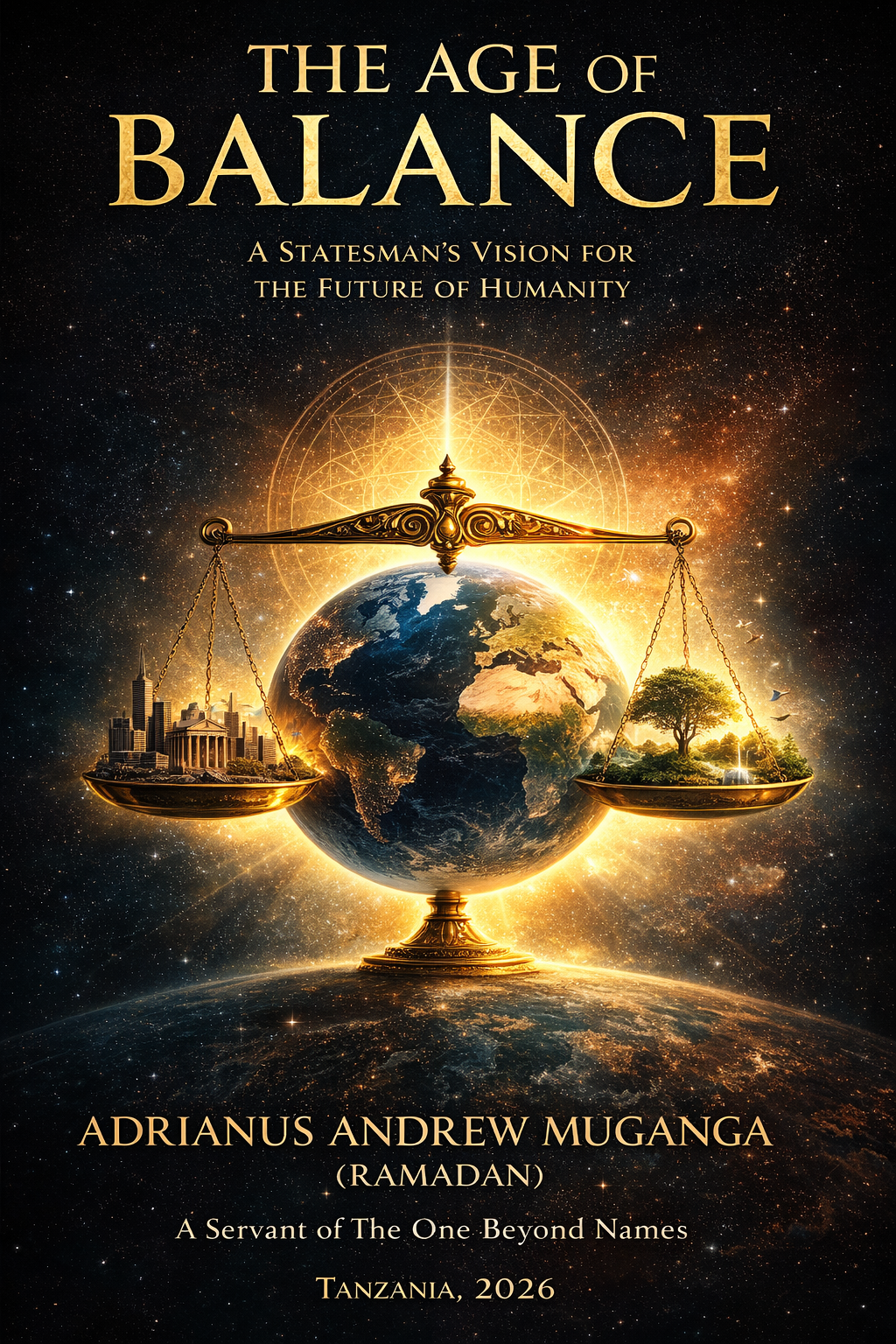
The Age of Balance: A Statesman’s Vision for the Future of Humanity presents a broad reflection on the historical evolution of political systems and the changing structure of global order. The book explores how human societies have continually created institutions and systems of governance in response to the need for stability, organization, and cooperation. By examining the long trajectory of human political development, the work argues that political systems are not permanent structures but dynamic arrangements that rise, evolve, and transform as societies grow and face new challenges.
From the earliest stages of human organization, communities developed forms of leadership and authority in order to maintain order and ensure survival. Early societies relied on traditional authority, cultural norms, and collective decision-making to regulate social life. Over time, as populations expanded and societies became more complex, these early arrangements evolved into more structured systems of governance. Kingdoms and empires emerged as dominant political forms, creating centralized authority and administrative institutions capable of managing large territories and diverse populations.
The rise of empires represented a major stage in political development. Empires introduced more sophisticated administrative systems, legal structures, and economic networks that connected distant regions. However, imperial governance was often based on hierarchical power and expansion, which created tensions between domination and stability. While empires provided order for long periods, they also faced recurring challenges such as internal rigidity, economic strain, and resistance from diverse populations. These pressures eventually contributed to cycles of decline and transformation.
The transition from imperial structures to modern nation-states marked another important phase in political evolution. The emergence of the nation-state introduced new ideas of sovereignty, citizenship, and political legitimacy. Governments increasingly derived authority from defined territorial boundaries and recognized populations rather than purely from dynastic or imperial claims. This transformation also produced new forms of political organization, including representative institutions, constitutional governance, and international diplomacy among sovereign states.
In the modern era, international relations became structured around the balance of power among states. The balance of power system sought to prevent domination by any single state by maintaining equilibrium among competing powers. While this system contributed to periods of stability, it also produced rivalry, conflict, and shifting alliances. As technological progress accelerated and economic interdependence expanded, the limitations of purely competitive power politics became more visible.
The twentieth century witnessed the creation of global institutions designed to encourage cooperation among nations and reduce the risk of large-scale conflict. International organizations, regional alliances, and diplomatic frameworks emerged to address shared challenges and regulate interactions among states. These institutions represented an effort to move beyond unilateral power toward collective governance. Yet the global system continued to face tensions between national sovereignty and international cooperation.
The book argues that contemporary global conditions reveal the emergence of a new historical phase. Rapid technological advancement, economic integration, environmental pressures, and the increasing interaction among civilizations have transformed the context in which political systems operate. No single nation can effectively address many of the challenges confronting humanity, including climate change, economic instability, security threats, and technological disruption. These issues require coordination across borders and institutions capable of managing shared responsibilities.
Within this context, the book introduces the concept of the Age of Balance. The Age of Balance represents a stage in political development in which stability is achieved not through domination or centralized control but through equilibrium among nations, institutions, and civilizations. In this emerging framework, legitimacy is increasingly linked to the capacity of leaders and institutions to maintain balance between competing interests while safeguarding the collective well-being of humanity.
The Age of Balance emphasizes several key principles. One principle is the recognition that sovereignty carries responsibility. Nations retain their independence and authority, but they must also cooperate with others in addressing challenges that affect the global community. Another principle is the importance of dialogue and mutual respect among civilizations. As cultural diversity becomes more visible in global interactions, sustainable governance requires mechanisms that promote understanding rather than conflict.
The book also emphasizes the role of ethical leadership in guiding societies through periods of transformation. Historical transitions often create uncertainty and instability, and responsible leadership becomes essential in maintaining legitimacy and trust. Statesmanship in the Age of Balance requires the ability to balance national interests with broader human responsibilities, to encourage cooperation without erasing diversity, and to build institutions capable of adapting to changing global realities.
Throughout the work, historical examples are used to illustrate how political systems evolve and why periods of crisis often precede major institutional change. Moments of instability are not presented solely as signs of decline but also as opportunities for renewal and adaptation. By understanding the patterns that have shaped past transformations, societies can better prepare for the transitions that lie ahead.
The Age of Balance does not propose a single universal model of governance but rather a framework for thinking about how different political systems can coexist within a cooperative global structure. The book suggests that the future of international order will depend on the ability of nations and institutions to maintain equilibrium between autonomy and cooperation, power and legitimacy, and diversity and shared responsibility.
Ultimately, the work invites readers to reflect on the long-term direction of human political development. It encourages scholars, policymakers, and citizens to consider how humanity can move beyond cycles of domination and conflict toward a more balanced system of global relations. By emphasizing dialogue, ethical leadership, and shared stewardship of global resources, the book presents a vision of political evolution in which stability emerges from balance rather than from the concentration of power.
The Age of Balance is therefore both an exploration of historical patterns and a reflection on the possibilities of the future. It seeks to contribute to ongoing discussions about global governance, the responsibilities of leadership, and the role of humanity in shaping a stable and cooperative world order.
#Political Philosophy
#International Relations
#Global Governance
#Geopolitics
#Political Systems
#Future World Order
#Balance Of Power
#Global Cooperation
#Civilizational Studies
#Political Leadership
#Ethical Governance
#Institutional Development
#Multipolar World
#Political Transformation
#Diplomacy
#Comparative Politics
#World Systems
#Strategic Studies
#Peace And Conflict Studies
#Future Studies.