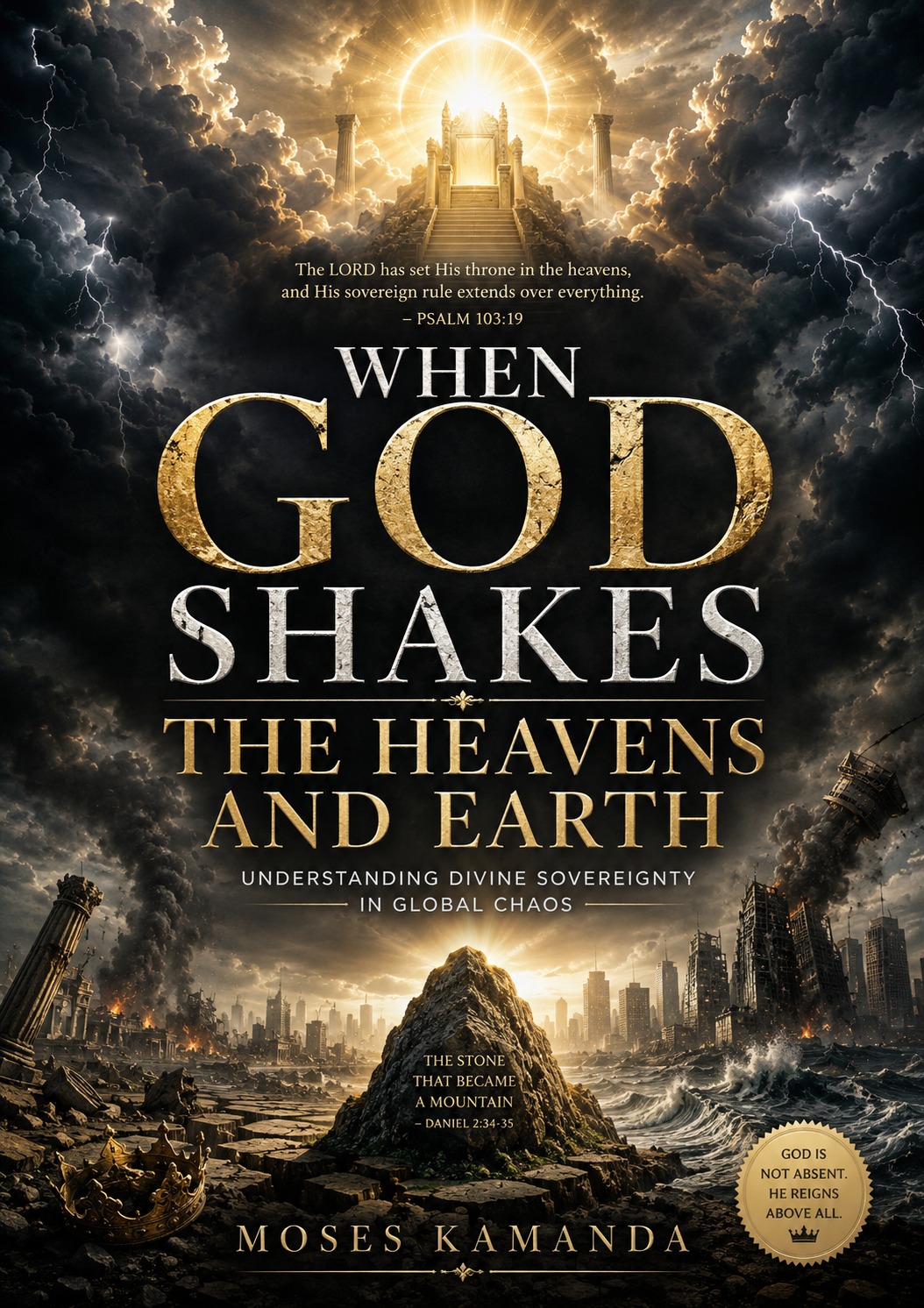
The Wilderness: A Return Before Truth Was Divided is a contemplative and structural work that examines human responsibility, authority, and formation through the lens of collapse rather than belief. The book does not present a doctrine, spiritual system, or ideology. Instead, it offers an orientation guiding the reader to recognize what remains when inherited structures, identities, and certainties can no longer carry responsibility.
At its core, the book argues that many of humanity’s recurring crises, moral, spiritual, political, and personal do not originate from ignorance or lack of belief, but from a breakdown in formation. Authority is repeatedly exercised without restraint, power without preparation, and certainty without accountability. The wilderness, as described in this work, is not a place of escape or punishment, but a necessary condition that emerges when alignment collapses and false supports are removed.
The book is organized as a movement rather than a collection of ideas. This movement follows a clear axis: Trust → Collapse → Preparation → Authority → Completion → Return → Release. Each stage exists only in relation to the others. Understanding the structure is essential, as the author deliberately resists isolated conclusions, portable insights, or positions that could be adopted as identity.
Part I: Trust Before Conflict
The opening section reframes the beginning of the human story. Rather than starting with failure or disobedience, the book begins with alignment. Life is presented not as ownership, but as entrustment. The human being is described as a carrier, not a possessor responsible for what is given, but never elevated above it.
Adam is treated not primarily as a historical figure, but as a state of being: a condition in which awareness, freedom, and responsibility operate without division. In this state, awareness exists without ego, freedom without domination, and harmony without self-reference. The fracture does not begin with rule-breaking, but with a subtle shift from trust to self-reference, where justification replaces responsibility. Once this shift occurs, exile becomes inevitable—not as punishment, but as consequence.
Part II: The Wilderness Begins
With the loss of alignment, the wilderness emerges. The wilderness is defined as a condition in which inherited beliefs fracture, certainty fails, and external structures no longer provide orientation. Silence replaces explanation. Comfort is removed, not out of cruelty, but because comfort delays formation.
This section emphasizes that the wilderness does not teach through instruction. Reality itself becomes the teacher. Repetition, delay, contradiction, and isolation serve as formative pressures that reveal whether responsibility can be held without reinforcement. Faith, if it survives, does so without certainty. Truth is preserved precisely because it is no longer defended.
Part III: Formation of the Carrier
Here the book addresses selection, ambition, and identity. It argues that desire for authority disqualifies rather than prepares. Formation is not about worthiness or moral superiority, but capacity. Identity inherited from tribe, system, or belief must be emptied so that responsibility can stand without validation.
Inner governance replaces external command. Obedience is redefined not as fear-based compliance, but as restraint that remains intact even when no one is watching. This section insists that responsibility cannot be borrowed, delegated, or performed, it must be embodied.
Part IV: The Test of Power
Power is revealed as a magnifier rather than a corrupter. What collapses under authority was already unformed. The book contrasts figures who underwent long preparation before power with those who inherited influence without restraint. The difference is not intention or sincerity, but formation.
The irreversible test appears when the first compromise is justified. At this point, return may still be possible, but it quietly closes once justification replaces restraint entirely. The wilderness is shown to be preventative; when it is bypassed, collapse becomes public and destructive.
Part V: Signs, Dreams, and Deception
Signs are treated cautiously. They exist to preserve alignment, not to elevate individuals. When signs become frequent, sought after, or claimed as proof of authority, they become traps. Spiritual entitlement emerges, and collapse disguises itself as mission.
False prophets are not identified by names, but by patterns: comfort before cost, influence without restraint, performance without transformation. Discernment is framed not as judgment of others, but as awareness of formation.
Part VI: Completion Without Elevation
Completion is illustrated through figures such as Joseph and Muhammad, who are presented not as objects of devotion, but as examples of restraint under authority. Completion does not mean supremacy or expansion. It means the refusal to claim ownership of truth or to insert oneself as an intermediary.
The book argues that revelation ends not with greater control, but with responsibility returning fully to humanity. Authority without privilege becomes the final test of alignment.
Part VII: The Return — 21st Century
The final section brings the wilderness into the modern world. Noise replaces silence, information replaces formation, and comfort replaces restraint. Suffering multiplies because systems grant power without preparation and speed without depth.
Remembrance is defined not as awakening to new knowledge, but recognition of what has always been required. One aligned life, the book claims, stabilizes many without forming a movement. Truth remains free only when it is not owned.
The book ends with return without claim: returning to ordinary life, carrying nothing, becoming nothing special, and allowing truth to remain unpossessed.
Conclusion
The Wilderness does not seek followers, agreement, or belief. It removes shelter rather than offering reassurance. Its purpose is not to persuade, but to orient to clarify what remains when certainty collapses and responsibility can no longer be outsourced.
For readers who have encountered loss of meaning, exhaustion with inherited explanations, or authority without formation, the book offers neither comfort nor instruction. It offers something rarer: a way to remain governed when nothing external can govern you.
#Wilderness Formation
#Human Responsibility
#Spiritual Alignment
#Authority Without Ego
#Truth Without Ownership




_ebookfrontcover.jpeg)